

If there was one trend this year at CES 2026, it's AR glasses. Over a dozen brands showcased new products at the event, and what stood out was just how much progress this category is making. Having used close to a dozen AR glasses over the last 12 months, it was exciting to see the likes of Even Realities G2 and Rokid's Meta-rivaling AI Glasses.
Then there's Appotronics. The Chinese brand will be familiar if you've used a laser projector in recent years, with its ALPD tech used in high-end models and cinemas. The brand is turning its attention to optical light engines for AR glasses, and showcased two new products: the Dragonfly G1 Mini, and Dragonfly C1.
The Dragonfly G1 Mini is interesting as it is significantly smaller than its predecessor, coming in at just 0.2cc. This allows AR device makers to roll out glasses that are thinner and lighter, with Appotronics touting glasses as light as 29g — half the weight of the Meta Ray-Bans.
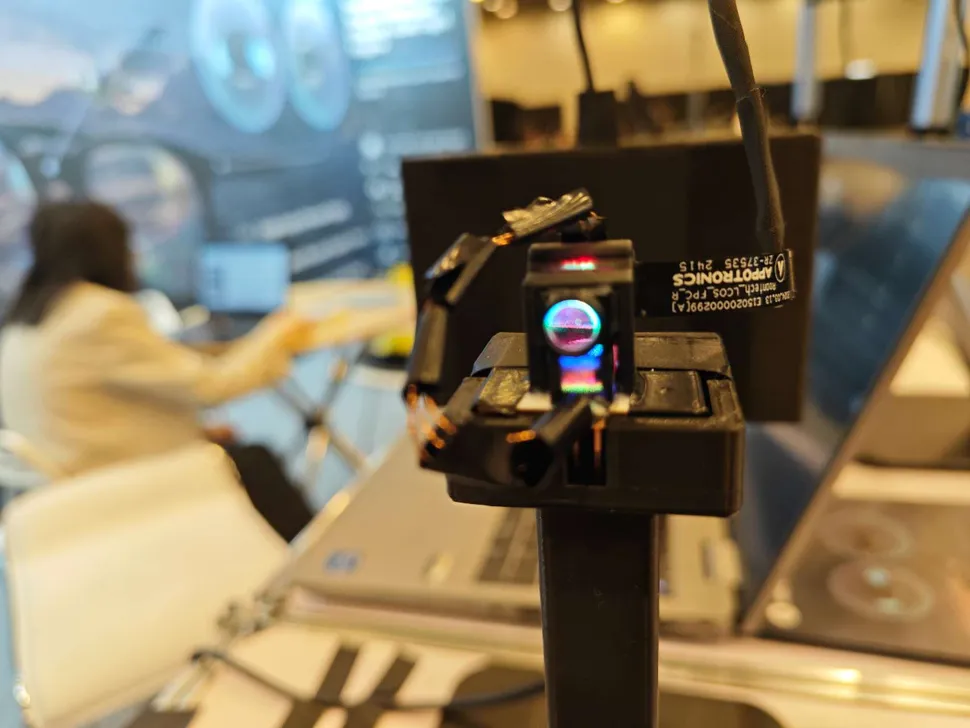
The engine is built on Liquid Crystal on Silicon (LCoS) tech, and the key benefit is that it delivers binocular imaging, so only one light engine is needed to power a pair of AR glasses. By contrast, the Meta Ray-Ban Display uses a monocular light engine that's embedded in the right lens.
Another change is that the light engine is positioned in the center of the frame, and this again allows brands to deliver glasses with thinner overall designs or bigger batteries. I talked to Chen Menghao, General Manager of the Appotronics Innovation Center, and he indicated that the light engine is being used in Sharge's upcoming Loomos S1 glasses, which weigh just 29g.
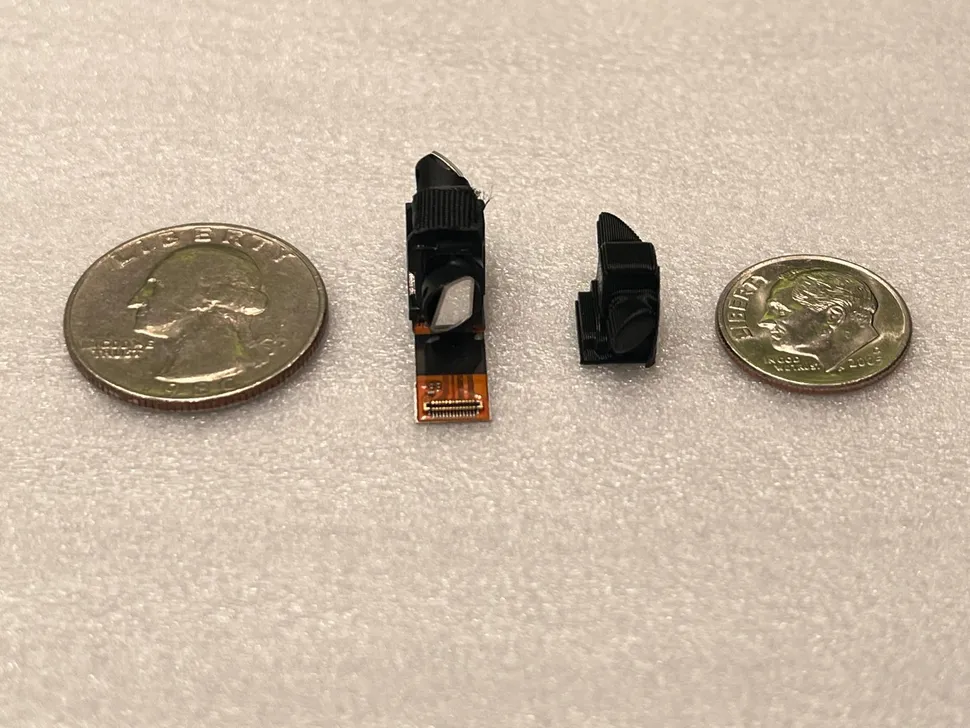
The Dragonfly C1, meanwhile, is the first full-color dual-split LCoS design, and it delivers binocular AR display in full color via a single module. That in itself is a big deal, and Menghao talked about how demand for AR glasses is driving innovation into chromatic light engines. Whereas the G1 Mini uses a regular green LED, the C1 has RGB LEDs that enable full-color projection, unlocking a suite of new use cases.
While I'm yet to get my hands on the Meta Ray-Ban Display, I've been using Even Realities' G2 in the last two weeks, and I really like the fact that I can get notifications and relevant data without having to pull out my phone. The G2 uses a regular green projection, and I'm intrigued by how RGB lenses will make a difference in this area.
The key takeaway after talking to Menghao is how Appotronics is pioneering smaller optical light engines, and it's astonishing to see how much progress is being made in just a matter of months. That's always the case with a new category in general, and it's clear that AR glasses will see the kind of upgrades that we got with phone cameras over the last decade — I can't wait.